Showing posts with label Fantasy. Show all posts

Friday, 14 December 2018

Mortal Engines & the Tyranny of Realism

Urgh. How very unrealistic.

I love realism in my speculative fiction, but I am by no means beholden to it. I can enjoy realistic science fiction like The Andromeda Strain, 2001, Interstellar, Silent Running, and Moon at least as much as I relish scientific romance & space operas like the Space Trilogy, the Barsoom saga, & Star Wars. It's answering the question "Do you like hard or soft science fiction" with "yes."

Take dragons, for instance. I greatly enjoy the likes of The Last Dragon/Dragon's World: A Fantasy Made Real, which offered a fascinating pseudo-palaeontology for dragons, from the early draconic creatures of the Late Cretaceous which survived the K-T extinction, to the variety in forms which led to Marine, Occidental, and Oriental forms. Similarly, Gordon R. Dickson's The Dragon and the George and its spiritual companion, Peter Dickinson's The Flight of Dragons (both inspiring the fascinating Rankin-Bass cartoon sharing the latter's name) offer inventive extrapolations into dragon society in fantasy settings, as well as the anatomical nature of dragons.


8-year-old Aly ate stuff like this right up. In this age of the Internet, daft nerds like me can explore further than ever. Shad Brooks' series Fantasy Re-Armed does for other fantasy beings what has been done for dragons, from dwarves to elves, orcs to mermen, minotaurs to centaurs, fairies to giants, while also exploring traditional fantasy elements like dungeons, castles, paladins, and barbarians. It's a great time for those people in the middle of that very niche Venn diagram that loves hard science and complete invention.

At the same time, however, I don't need my fantasy creatures to be realistic (imagine that). I don't scoff at the unrealism of Ancalagon the Black being ludicrously huge, nor will I be over fussed if one dragon or another defies the laws of aerodynamics. I will not immediately dismiss a work of fiction because one thing or another isn't realistic, and I cannot believe I'm actually saying these words about stories with freaking dragons in them. Speculative fiction does not have to adhere to the constraints of our current reality: it doesn't even have to acknowledge them. All it has to do is be true to what it is trying to achieve.


Monday, 19 March 2018

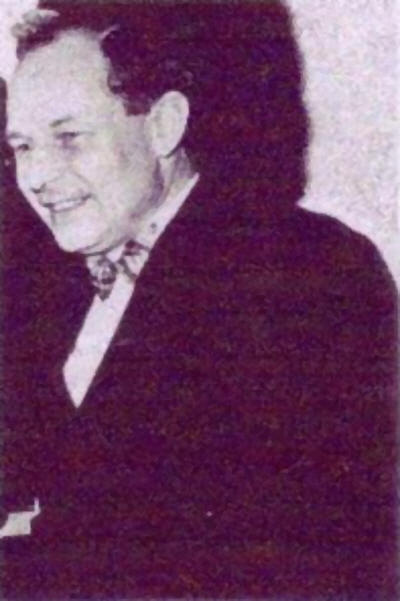
William Blain, the Comics Wizard of Gourock

 
Image taken from This Was The Wizard, courtesy of Down The Tubes
Eventually Willie Blain became Managing Editor of all of the Thomson line of comics, originating their girls' comics with Bunty (1958), their boys' adventure comics with Victor in 1961 and such famous titles as Jackie (1964). Although he rarely gets a credit, a poll of the most important figures in the history of British comics would almost certainly have to include Willie Blain in the top five.
- Steve Holland
Today would have been the 115th birthday of William Blain. You may not immediately recognise the name, but many a child who grew up in Scotland in the 20th Century will be very familiar with his works.


Saturday, 13 January 2018

Six Quarter-Centuries of Clark Ashton Smith


He and his followers were well armed and accoutered. Some of the men bore coils of rope and grapplinghooks to be employed in the escalade of the steeper crags. Some carried heavy crossbows; and many were equipped with long-handled and saber-bladed bills which, from experience, had proved the most effective weapons in close-range fighting with the Voormis. The whole party was variously studded with auxiliary knives, throwing-darts, two-handed simitars, maces, bodkins and saw-toothed axes. The men were all clad in jerkins and hose of dinosaur-leather, and were shod with brazen-spiked buskins. Ralibar Vooz himself wore a light suiting of copper chain-mail, which, flexible as cloth, in no wise impeded his movements. In addition he carried a buckler of mammoth-hide with a long bronze spike in its center that could be used as a thrusting-sword; and, being a man of huge stature and strength, his shoulders and baldric were hung with a whole arsenal of weaponries.
 - "The Seven Geases," pre-dating the current D&D Everything's Better With Dinosaurs craze by 80-odd years

125 years marks since the birth of Clark Ashton Smith. 2018 marks several other important anniversaries in the world of weird fiction, in particular dinosaur fiction. Because of this, I'm going to take inspiration from Mr Smith, & decide to finally do a thing that I've been wanting to do for years. I'll explain more in a future post.

Mr Smith wrote dozens upon dozens of extraordinary stories & poems: even if he doesn't receive anything like the recognition he deserves, his influence is clear among those who have shaped the worlds he lit up with the sparks of his prose.

Saturday, 24 January 2015

Black Gods and Scarlet Dreams

... Interesting choice of cover illustration.


Since it's C.L. Moore's birthday, I thought I'd talk a wee bit about Jirel.


Thursday, 26 September 2013

Kaiju Rising: 10 Days to Go


I hadn't had the chance to discuss this new collection of short stories which is just the sort of thing I love, but recent revelations have moved me to action:

Shh. So I’m not supposed to tell you this, but I’m one of the authors who will be unlocked if funding is met and exceeded in a new Kickstarter. There’s at least three of us mysterious contributors (I won’t tell you the identity of the others) who will be revealed if Kaiju Rising meets its stretch goals.
As it’s an anthology for monster stories, you can darned well bet that I’m drafting a new Dabir and Asim story for the collection. I’m pretty busy with other stories right now, but it was such a great looking assembly that I couldn’t stand to pass up the opportunity.
The project is being published by J.M. Martin, Tim Marquitz and Nick Sharps (the latter two serving double-shift as editors), illustrated by Dan Howard, and will feature stories by Larry Correia, Peter Clines, James Lovegrove, Erin Hoffman, James Maxey, Jaym Gates, Timothy W. Long, Mike MacLean, Natania Barron, Joshua Reynolds, David Annandale, Clint Lee Werner, Jonathan Wood,  Gini Koch, Paul Genesse, Edward M. Erdelac, Samuel Sattin, Bonnie Jo Stufflebean, and Peter Rawlik.
The first stretch goal will include additional internal art from Robert Elrod and Chuck Lukacs, and the next three stretch goals are authors. I’m not sure which of those three I am, but I’m hoping you’ll join in the Kickstarter and unlock my story. The full details can be found here.

Monday, 15 July 2013

The Problem with Humans


The plight of the misunderstood orc

Taking a brief time out from my work, I've been having a gander at several things. One was G. Willow Wilson's post on Tor, "The Orc Renaissance: Race, Tolerance and Post-9/11 Western Fantasy." It's a deeply problematic essay about a deeply problematic issue, and it leads to one of my biggest issues when it comes to fantasy fiction these days - as well as a realisation I came to in my own attempts at dabbling in the genre.

Tuesday, 7 May 2013

Ray Harryhausen - Requiescat in Pace

I had to learn to do everything because I couldn't find another kindred soul. Now you see eighty people listed doing the same things I was doing by myself.
 - Ray Harryhausen
EDIT: The following is something I wrote for my BA degree in 2006. The subject was to discuss a pioneering filmmaker's impact on modern media: I chose Ray Harryhausen. I figure it only fitting to pay tribute to the man who had such a profound impact on my imagination to share some of the findings I have on a blog that might not exist without his inspiration.


Friday, 22 March 2013

The Bones of the Old Ones


Technically speaking, I shouldn't be reading this book, since it isn't out in the UK. However, I just couldn't wait, so I ordered one from the US.

Howard Andrew Jones' The Bones of the Old Ones is part of the new generation of Sword-and-Sorcery, and very much in the tradition of its predecessor, The Desert of Souls. Indeed, the narrative structure is superficially similar to the first book: Asim & Dabir encounter a woman who isn't where she's supposed to be, they go on a journey with the girl to find magical macguffins, one of them falls for the girl, they pick up an elderly scholarly friend to help them out, and have to contend with evil sorcerers with unnatural constructed servitors, for The Fate of the Caliphate is in the balance. That isn't necessarily a criticism, of course, and it doesn't mean the tale is predictable or repetitive in the slightest. In fact, it offers something of a mirror image to Souls' plot, with the other member of the duo falling for Najya, and the pair's friendship and experience leading them to adapt better to unusual circumstances. Plus there are certainly enough differences in the details to make this more than a retread.


Monday, 11 March 2013

Bite-Sized Blog: Fantasypunk


Ever since Lost Soul Andy introduced me to MrBTongue's series "Tasteful, Understated Nerd Rage" to me, I've been enthralled by his videos, and I may well be using them as starting-off points of discussion in future posts. This one is interesting all on its own, but some of the things he said got me thinking...

A thought came to me watching this video that I might investigate further. An abstract: I'd argue that Howard's brand of Sword-and-Sorcery could be to traditional fantasy what Cyberpunk is to science fiction.

 - Both CP and S&S typically draw from noir styles: Noir is visually styled after German Expressionism, and the typical noir hero could be considered a variation on Nietzche's Übermensch. In this form, the Übermensch is a cynical, magnetic, powerful man who nonetheless operates with a strong internal morality not governed by law, religion, or any other social construct. Sound familiar?

 - The worlds of CP and S&S tend to be full of corruption, oppression and stagnation, the haves treading on the faces of the have-nots. The world is populated with several archetypes: women are downtrodden or trapped by social circumstances, or resort to using their wiles to gain some measure of control over their destiny; brutish thugs carry out the will of craven magnates who earned their fortune either through genetics or villainy; the few genuine law enforcers contend with crooked police and greedy judges as well as outlaws; politicians are in the pocket of some sort of criminal society and more invested in holding onto their station than improving society for the disadvantaged. Over all is hanging a cloud of despair, and a sense of imminent collapse: the world is walking a tightrope between the dominance of a totalitarian regime, and the chaos of all-out anarchy, depending on which part of the world you're in. Sounds rather like the Hyborian Age, does it not? Heck, it sounds like most of Howard's work in general.

 - The "punk" aspect of CP's name suggests youth, impetuousness, the angry young 'un, critical and suspicious of authority, treasuring freedom and self-actualisation. Adding "punk" to something gives a certain sort of impression, of a surly delinquent with a sharp mind, rattling cages, tipping over bins, tearing down campaign posters. Howard began writing professionally in his teens, and his works are certainly full of this sort of thing even as he approached 30.

 - The video alleges that CP operates in a sort of "danger zone": while science fiction operates in the far future and fantasy in the far past/another world analogous to earth's past,* CP is typically set in the Not Too Distant Future, and so the issues of today can be reflected as they are, instead of applied with futuristic/fantastical examples. For example, Cyberpunk could deal with racism directly, instead of alluding to it via fantastic racism between elves and dwarves, or robots and organic life, or aliens and other aliens. You'd think this might fall apart with Howard, but I think there are two very crucial elements: first, Howard's worlds are cyclical. Civilizations rise and fall, peoples flourish and vanish, kingdoms conquer and disappear, and we have no knowledge of them save through smatterings of legends and word cognates finding their way into our languages - to apply a slight reinterpretation on George Santayana's original phrase, "Those who cannot remember the past are condemned to repeat it." The second is that the Hyborian Age is just as informed by Howard's contemporary world as it is by the past: Mark Finn explains it perfectly in Blood & Thunder, when he discusses how the huge number of migrant workers into the small town of Cross Plains, and subsequent industrialisation and economic upheaval, would have affected Howard's world. Indeed, stories like "Beyond the Black River" are as much about then-modern development as they were about Cowboys & Indians, or Spaniards & Aztecs, or Normans & Gaels, or Romans & Picts (etc), while the much maligned "The Vale of Lost Women" is given much more relevance when compared with the Cynthia Anne Parker story. The Hyborian Age is thus much closer to our modern world than the vast gulfs in time might indicate.

Thoughts?  Am I mad, or just a fool?

*Of course I disagree strongly with this very arbitrary and, frankly, untenable distinction: there's fantasy set in the future, and science fiction set in the past, and plenty of both set in the "danger zone" he discusses. But that's neither here nor there.

Friday, 28 December 2012

Locus Online's 2012 All Centuries Poll is Very Confusing

Courtesy of Black Gate, I came across Lotus' latest write-in poll for The Best Fantasy/Science Fiction works of the 20th and 21st centuries. I say works, because although they say it's "a poll for the best novels and short fiction of the 20th and 21st centuries, with five categories in each century: SF novel, fantasy novel, novella, novelette, and short story," I can't find much distinction between novel, novella, novelette or short story - not to mention a few other confusing elements.

Read on for the results.


Monday, 26 September 2011

Science Fiction vs Fantasy, or, Optimism vs Nostalgia

It's a common argument that I see: science fiction is intellectual, productive, inspirational, innovative, optimistic, and emphasises everything good and worthwhile about humanity.  Fantasy, however, is superstitious, nostalgic, stagnant, and emphasises the glorification of the past over hope for the future.  It's one I utterly disagree with - what of dystopian science fiction, for example, and those fantasy stories which open up realms of insight and supposition normally the domain of science fiction - but the dichotomy usually favours science fiction as being "good" and fantasy being "bad."  It's a dangerous stereotype, and one you'd think the supposedly higher-minded SF fans would recognize and avoid.

Well, I think I've found the ultimate example of that argument. Enter Science Fiction vs Fantasy by Ryan Somma.


Sunday, 1 May 2011

Of Hedgehogs and Foxes

Too many of the comparisons between JRRT and GRRM concentrate on the "realism" between the two. Look at this review of A Game of Thrones:

Some people have compared it to Tolkien’s Lord of the Rings (LOTR). I enjoyed LOTR. However Tolkien minimized the ability of lust and greed to motivate people. For example, when Aragorn arrives to claim his kingdom, the last King had been missing for about ONE THOUSAND YEARS.  At the story’s end the Steward eagerly hands over rulership. While such unwavering duty, honor and loyalty was indeed the ideal of the Anglo-Saxon, Finnish, Celtic and Norse myths that inspired Tolkien, real life events were messier.  Were Tolkien more realistic, the Stewards would have declared themselves Kings ages ago. If Aragorn showed up, the current King would have arranged a very quick execution for Aragorn and his supporters.

(Wait, Denethor eagerly handed over rulership? Since freakin' when? Why would the Stewards bother to declare themselves kings when they're functionally rulers of kingdoms in the absence of the original bloodline of kings anyway? As for Denethor quickly executing Aragorn and his supporters - are you saying Denethor's going to execute not just one of the most potent figures of hope and encouragement the kingdom's experienced in centuries, but the vast reinforcements Aragorn brought along at the nick of time that saved his kingdom's bacon from the innumerable hordes of Mordor?  Don't be bleeding preposterous.)

Most of all, though, I can't help but laugh at the idea that Tolkien somehow downplayed the ability of greed to motivate people, when greed is practically one of the biggest motivators in the entire saga.  What else but greed was it that motivated nine kings of men to fall to darkness and enter the unwavering service of darkest evil?  What else but greed motivated the destruction of the northern kingdom of Arnor?  What else but greed got the last king killed in the first place, and is a primary reason for nearly all the bad things that happen to all the kingdoms and characters in the book?  I can understand Tolkien not concentrating on lust, but greed?  I mean good grief, man.

That said, sometimes ones come across some genuine food for thought. I came across a rather fascinating essay today comparing Tolkien's The Lord of the Rings to Martin's A Game of Thrones. While I don't agree with everything Janet Potter says, particularly in regards to LotR, she does put forward this very intriguing morsel:

I was a Russian major in college, so I can’t read a 500+ page book without Isaiah Berlin whispering in my ear. Berlin was the author of “The Hedgehog and the Fox,” an essay based on an ancient Greek adage: “the fox knows many little things, but the hedgehog knows one big thing.” Berlin divides writers into these two categories. Hedgehogs view the world as a stage for a single, encompassing logic (power corrupts, love conquers all, that kind of thing). Foxes are more fascinated by the infinite variety of the human condition. In Berlin’s signature comparison, Dostoevsky is a hedgehog, and Tolstoy is a fox.
The fantasy genre, although I admit I’m not its most versed reader, is full of hedgehogs. Godfather Tolkien, certainly, is pure hedgehog. What I find most fascinating about Martin is that he’s a fox in a hedgehog genre. While his world looks like fantasy (bastards! dwarves! whores! knights!), and the action revolves around the question of the seven kingdoms’ throne (Will Robert keep it? Are the Lannisters plotting for it? Will the Targaryens reclaim it?), the focus is on the clashing relationships and motivations of the people involved in the struggle.

Her preposterous first paragraph statement aside ("although I'm not an expert on this genre, I can still make authoritative statements on it because I did a Russian major") I think this is a very thoughtful and intriguing way to go. I found the entire original essay here:

There is a line among the fragments of the Greek poet Archilochus which says: ‘The fox knows many things, but the hedgehog knows one big thing.’ Scholars have differed about the correct interpretation of these dark words, which may mean no more than that the fox, for all his cunning, is defeated by the hedgehog’s one defence. But, taken figuratively, the words can be made to yield a sense in which they mark one of the deepest differences which divide writers and thinkers, and, it may be, human beings in general. For there exists a great chasm between those, on one side, who relate everything to a single central vision, one system, less or more coherent or articulate, in terms of which they understand, think and feel –  a single, universal, organising principle in terms of which alone all that they are and say has significance –and, on the other side, those who pursue many ends, often unrelated and even contradictory, connected, if at all, only in some de facto way for some psychological or physiological cause, related to no moral or aesthetic principle.
These last lead lives, perform acts and entertain ideas that are centrifugal rather than centripetal; their thought is scattered or diffused, moving on many levels, seizing upon the essence of a vast variety of experiences and objects for what they are in themselves, without, consciously or unconsciously, seeking to fit them into, or exclude them from, any one unchanging, all- embracing, sometimes self-contradictory and incomplete, at times fanatical, unitary inner vision. The first kind of intellectual and artistic personality belongs to the hedgehogs, the second to the foxes; and without insisting on a rigid classification, we may, without too much fear of contradiction, say that, in this sense, Dante belongs to the first category, Shakespeare to the second; Plato, Lucretius, Pascal, Hegel, Dostoevsky, Nietzsche, Ibsen, Proust are, in varying degrees, hedgehogs; Herodotus, Aristotle, Montaigne, Erasmus, Molie`re, Goethe, Pushkin, Balzac, Joyce are foxes.

Of course, like all over-simple classifications of this type, the dichotomy becomes, if pressed, artificial, scholastic and ultimately absurd. But if it is not an aid to serious criticism, neither should it be rejected as being merely superficial or frivolous; like all distinctions which embody any degree of truth, it offers a point of view from which to look and compare, a starting-point for genuine investigation.
 - Isaiah Berlin, "The Hedgehog and the Fox"

I don't know why I haven't come across this idea before, since I did a little philosophy at college - albeit just the beginner's level - but it sounds like the sort of thing I'd gravitate towards.  Of course, it isn't a perfect dichotomy, and the dichotomy isn't necessarily found in either Tolkien's nor Martin's works.  There are tons of little things in The Lord of the Rings, and as Potter later admits, there might be a big in A Game of Thrones, and I really wonder if it's true that fantasy is full of hedgehogs at all. That said, it got me thinking about other authors, and whether they're hedgehogs or foxes.

Some are fairly clear, to me, at least. Lovecraft strikes me as a quintessential hedgehog: he wrote pretty much exclusively in the realm of horror and weird, his characters mostly cut of the same cloth, and most of them have something to do with the harsh cosmic indifference codified by his Yog-Sothothery.  Conan Doyle, then, seems like a fox: he wrote in a wide variety of genres, his characters and settings draw from a wide selection of types and fields, and his themes seem to vary from work to work.

Based on my reading of the essay, I can make a preliminary and no doubt wildly subjective sorting of my favourite authors into these disparate taxons. In my crazy world, Jules Verne, Edgar Rice Burroughs, H. Rider Haggard, C.L. Moore, Isaac Asimov, Ursula le Guin, Michael Moorcock, Lord Dunsany, Charles Saunders, and J.R.R. Tolkien are hedgehogs, while Alexandre Dumas, H.G. Wells, Harlan Ellison, Lloyd Alexander, Theodore Sturgeon, Richard Matheson, Ray Bradbury, Alfred Bester, A. Merrit, and Olaf Stapledon are foxes. As you can see, while I suspected there would be a correlation with fantasy authors being hedgehogs and SF authors being foxes, there are more fantasy foxes and SF hedgehogs than I expected in my assessment.

Then, there are those who seem to confound me. Clark Ashton Smith, for example, has arguments for both, perhaps making him some sort of bushy-tailed, spiny hedgefox. Another one of these is Robert E. Howard. Do Howard's grand unifying themes about barbarism & civilization, hate, decadence, atavism, and the like make him a hedgehog, or do the multiple exceptions and divergences and work in multiple genres make him a fox?

Then I go on to the ultimate question: am I a hedgehog or a fox, or a fox who believes he's a hedgehog, or a hedgehog under the delusion he's a fox, or one or the other who is one but aspires to be another? Ever the contrarian, I don't think it has to be an either/or situation: I'd like to think there are big things and little things. As Berlin says, the dichotomy isn't concrete, and enforcing it as such would defeat its very purposes. So I'll just say I'm a badger: both the fox and the hedgehog have valid arguments, but it isn't as simple as pluralism or monism.

I don't know whether it's because I'm a bit of a contrarian absurdist at heart, but I get the distinct impression that this is one of those things that might be very subjective, and that whether an author is a pluralist or a monist depends upon the observer as much as the work itself. And, again, Berlin notes this, as he argues that Dostoevsky believed Pushkin to be similar to himself, where Berlin considered the former to be a hedgehog and the latter an "arch-fox." So there's always that little voice in the back of my mind saying "are you sure you aren't just seeing things that aren't there?  Is there something you're unconsciously blocking from your view which contradicts your argument?"  Such is the nature of a guy who is frequently confounded by the vagaries of philosophy.

The best remedy is debate: what do you fine folks think?  Have I gotten some authors completely wrong, or do you think I might have something?  Have I completely misinterpreted the argument itself? I'd love to hear your thoughts on the notion.

All this talk of hedgehogs and foxes and badgers has me thinking of The Animals of Farthing Wood, which makes A Game of Thrones look like Winnie the Pooh when it comes to the merciless slaughtering of characters. Maybe that's why I'm so unimpressed by A Game of Thrones: when you've watched sentient animals being killed every other episode of a children's cartoon, deaths in gritty fantasy sagas don't have the same heartwrenching impact.

Saturday, 23 April 2011

The Gollancz Fifty

Awesome news: to celebrate the company's 50th anniversary, the folk at Gollancz compiled a list of the 50 best science fiction and fantasy novels they've published (keep in mind that last part, since there are a few very obvious missing names).  Guess who made it!